Welcome to the fish facts page. Here are some facts and pictures of a few fishes from Atlantic waters in the northeast United States. The fish facts section will soon be expanded to encompass all Atlantic fish species along the entire east coast. Please check back soon for updates!
Atlantic Herring
(Clupea harengus harengus)

|
Description: Compressed body with a large mouth and projecting lower jaw. They have a patch of teeth on the roof of the mouth.
Habitat: Open ocean travelers, spawning occurs over rocky bottom generally between 2 and 30 fathoms
Diet: Feeding on copepods, shrimp, and larvae is common in juveniles and adults.
Fishery: Herring are a major prey resource for species like tuna, cod, bass and many shore birds and marine mammals. Commercial fishery prices range around $150 per ton.
|
|
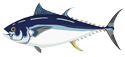
Bluefin Tuna
(Thunnus thynnus)

|
Description: Dark blue to black in color with green-grey shine. Maximum size is 118 inches (9.8 feet!), 1,496 pounds.
Habitat: Found in the water column (pelagic) from Iceland to Africa.
Diet: Eat numerous other fish
Fishery: Caught with nets and rod and reel. Large commercial and recreational, mainly for the Japanese sushi markets. Price per pound: $10.00 30.00.
|
|
Bluefish
(Pomatomus saltatrix)

|
Description: Deeply forked tail, color is sea-green/blue above to silvery below. Maximum size 3.5 feet.
Habitat: Found both inshore and offshore in the water column (pelagic) from America to Australia in warmer waters.
Diet: Voracious, eats mackerel, herring, squid, hake, butterfish and more.
Fishery: Caught with trawls, nets, hooks and traps. Commercial and recreational fishery. Price per pound: $1.00 2.00.
|
|
Brown Trout
(Salmo trutta)

|
Description: The interior of the mouth is entirely white. Lake run brown trout usually are silver, just like coho. However, once out of the water the typical large round spots, accented by a light colored hollow, begin to show. Normally the anal fin has only 9-10 rays, which separate it from other trout and salmon with the exception of the occasionally caught Atlantic salmon.
Habits - In the Great Lakes brown trout are near-shore fish and are taken by shallow water trolling, surf casting or pier fishing. Usually brown trout in the Great Lakes are plumper than their inland lake and stream counterparts (similar to football shape) because of the super abundance of forage in the Great Lakes.
Habitat: Found in both streams and lakes.
Diet: Carnivorous, feeding on insects, crustaceans (especially crayfish), molluscs, salamanders, frogs, and rodents.
Generally feeding on the bottom, emerging to the surface at night.
Fishery: Native to Europe; now found in New Zealand, Asia, South America, and the US.
In the US found from coast to coast, and as far south as New Mexico, Arkansas, and Georgia.
|
|
Chinook (King) Salmon
(Oncorhynchus tshawytscha)

|
Description: Best identifying characteristic is teeth set in black gums. The base of the tail flares like the handle of a canoe paddle, offering the angler a grip sufficient to lift the fish. Like the coho, the interior of the mouth will also be gray or black. Tail spots are usually restricted to the top half of the tail, but may also appear on the lower half. The anal fin usually has 15 to 17 rays. Chinook do not jump and roll as much as coho, but have tremendous power and make long reel-screaming runs.
Habits - Open-water fishing is the best in spring and summer, as with coho. Migration to parent streams begin in late summer, with heavy concentration at stream mouths. Stream fishing peaks sometime in September, at the onset of spawning runs.
Habitat: These fish inhabit freshwater streams, estuaries, and the open ocean.
Diet: Adult chinooks feed exclusively on other fish species (piscivorous). The major species in the diet are smelt and alewife. Juveniles feed on plankton, aquatic insects and small fish.
Fishery: Southern California to Arctic waters of Alaska, Canada and Russia. Populations in Asia as far south as islands of Japan. Freshwater populations introduced to Great Lakes.
|
|
Codfish
(Gadus morhua)

|
Description: Color ranges from green-grey to red. Found from the surface down to 250+ fathoms in cooler water. Female cod may lay more than 3 million eggs yearly.
Habitat: Live on rocky to pebbly bottom that is necessary to hide from predators and finding food.
Diet: Eat clams, mussels, crabs, lobsters, sea stars, squid, a large variety of other fish and more. (basically anything they can, even rocks and sea birds have been found in cod stomachs!)
Fishery: Caught with trawls, nets, traps and hooks. Markets in the U.S. and overseas. Price per pound varies widely: $0.50 2.80.
|
|
Coho Salmon
(Oncorhynchus kisutch)

|
Description: Tail spots are concentrated on the top of the tail. The interior of the mouth is usually gray or black, but the gums are whitish. The anal fin usually has 12 to 15 rays. Also, while on the line, coho often roll sideways, many times entangling themselves in the tackle.
Habits - In spring and summer, coho can be found in open waters near concentrations of alewives or smelt - usually within 10 miles of shore in the upper 20 to 40 feet. In August and September, they concentrate in schools near mouths of the parent streams. Sometime in September, they begin ascending the spawning streams in waves.
Habitat: Freshwater streams and estuaries provide important habitat for chinook salmon. They feed on terrestrial and aquatic insects, amphipods, and other crustaceans while young, and primarily on other fish when older. Eggs are laid in deeper water with larger gravel, and need cool water and good water flow (to supply oxygen) to survive. Mortality of chinook salmon in the early life stages is usually high due to natural predation and human induced changes in habitat, such as siltation, high water temperatures, low oxygen conditions, loss of stream cover and reductions in river flow. These impacts are primarily caused by poor forestry practices, dams, and water diversions.Estuaries and their associated wetlands provide vital nursery areas for the chinook prior to its departure to the open ocean. Wetlands not only help buffer the estuary from silt and pollutants, but also provide important feeding and hiding areas. The draining and filling of wetlands and the pollution of the estuary from industrial discharges and run-off, negatively impact chinook salmon.
Diet: Adult coho feed predominately on rainbow smelt and alewife in all of the Great Lakes. In lake specific cases, coho have been known to feed on sport fish such as perch, chinook and sockeye.
Fishery: Occur naturally from southern California to Bering Sea, in coastal streams from Californian to Alaska, and in coastal streams from Northern Japan to Andyr River in Siberia. Major territory between Cook Inlet to Columbia River. Successfully transplanted to inland lakes and rivers in both North and South America, including Great Lakes.
|
|
Flatfish
(many species including all flounder, sole, halibut, dabs, plaice and turbots)

|
Description: Characterized by flattened bodied with both eyes on one side of the body.
Habitat: Sand or gravel bottom, often found well camouflaged with their surroundings
Diet: Fish, crabs, mussels, lobster, clams, worms and other bottom-dwelling organisms
Fishery: Caught mostly with bottom trawls, mostly a commercial and fishery. Price per pound: $1.00 to $3.00.
|
|
Haddock
(Melanogrammus aeglefinus)

|
Description: Generally resembles the cod but has a black line along each side and the black patch midway between along the back. Freshly caught, haddock are a dark purplish-grey. The belly is white.
Habitat: Common on smooth, hard bottom of broken shells, sand and pebbles. Prefers slightly warmer water than cod.
Diet: Sluggish but opportunistic, seldom feeding on other fishes but prefer clams, snails, worms, crabs and urchins as well as squid.
Fishery: Caught with hooks, nets and mobile gear. Prices range from $1.00 to $3.00 per pound
|
|
Lake Trout
(Salvelinus namaycush)

|
Description: Color pattern is mostly gray above and white below with creamy white mottling on the back, grading to spots on the side - no red or pink. The tail is distinctly forked.
Habits - Pre-eminently a deep-water and cold-water fish. In spring and during fall spawning season, when water is still very cold, lake trout may be taken in lake edge shallows. They too will run up rivers in the fall, and become quite accessible to anglers below the large dams which block and concentrate the runs. Summer and winter, they are taken by trolling and still fishing or "bobbing" in 50 to 200 feet of water. Large inland lakes near the Great Lakes are also likely sites. Some large lakes, well inland, maintain populations with annual plantings.
Habitat: Lake trout like cold water--45 to 55 degrees F is ideal. They prefer clear, clean lakes surrounded by infertile soils, such as those found in Cook, Lake, and St. Louis counties. In summer they spend their time in the deep parts of the lake, perhaps down to 100 feet.
Diet: Young lake trout eat plankton and insects that live on the lake bottom. Adults eat fish such as ciscoes and smelt.
Fishery: Lake trout were once a valued commercial fish in Lake Superior but were almost eliminated there by the sea lamprey, an exotic fish that attaches itself to other fish and eventually kills them. United States and Canada have worked together to reduce lamprey numbers. Most lake trout lakes are within the Boundary Waters Canoe Area Wilderness.
|
|
Mackerel
(Scomber scombrus)

|
Description: Dark bars running midway down the back, velvety to the touch. Dark grey to blue in color. Swift swimming require a lot of oxygen. Gather in dense schools of many thousands.
Habitat: Found at the surface down to 100 fathoms.
Diet: Eat shrimp, fish eggs, and plankton.
Fishery: Caught with nets, trawls and weir traps, mainly April to August. Price per pound: $0.10 0.30
|
|
Monkfish/Goosefish
(Lophius americanus)

|
Description: Strongly flattened body with a large head and enormous, tooth-filled mouth. Eyes are protected by horny protuberances with a fishing lure located behind the upper lip.
Habitat: Found at the tideline during cool months and in deeper water in the warmer season. Prefers rocky bottom.
Diet: A notorious diet, goosefish feed on seabirds of all descriptions as well as lobsters, squid and other invertebrates.
Fishery: The U.S. commercial market is small compared to demand in Europe. The heads sell between $1.00 and $4.00 per pound.
|
|
Spiny Dogfish
(Squalus acanthias)

|
Description: Characterized by a sharp spine in front of each dorsal fin, they lack an anal fin and have a flat head and the tapering snout ends in a blunt tip.
Habitat: Found in cool water, dogfish swim in swarms of many thousands from the surf zone to depths of 100 fathoms.
Diet: Dogfish are opportunistic, feeding on other fishes, shellfish, squid and other small marine organisms
Fishery: Currently the commercial fishery is closed all year due to scientific estimates of low numbers of reproducing females in the fishery.
|
|
Steelhead
(Salmo gairdneri)

|
Description: The interior of the mouth is white, unlike either coho or chinook. Also, the entire tail area is potted. Cheek plates and sometimes a line along the side are a rosy pink. Normally, the anal fin has 10-12 rays.
Habits - Steelhead spawn in the spring, as early as March, but they begin entering the spawning streams as early as the preceding September. A recently introduced summer-run strain of steelhead may enter the streams in mid-summer. Special early and late seasons are held to take advantage of these runs. Stream fishing is prime in October, November, March and April. In late spring and summer, steelhead can be found in big water - usually within a mile of shore at depths of less than 50 feet.
Habitat: Steelhead habitat requirements change as they go through different life phases. Adult steelhead need to have access to their natal streams. This means that streams must be free of barriers to migration, as the majority of spawning occurs in the upper reaches of tributaries. Adults also need access to spawning gravel in areas free of heavy sedimentation with adequate flow and cool, clear water. Steelhead utilize gravel that is between 0.5 to 6 inches in diameter, dominated by 2 to 3 inch gravel. Escape cover for spawning adults is also important.
|
|
Striped Bass
(Roccus saxatilis)

|
Description: Dark olive to blueish above, silvery on the belly with stripes on the sides. Average weight is from 15-35 pounds. Females are larger than males. Often found in the surf.
Habitat: Inshore waters at the surface mostly. Bass swim up into rivers and estuaries to spawn.
Diet: Voracious, eats smaller fish of various kinds, but also lobsters, shrimps and clams.
Fishery: Caught mostly with hook and line. Commercial and recreational fishery. Price per pound: $1.00 3.00.
|
|
Thorny Skate
(Raja radiata)

|
Description: Related to sharks. No spines on the tails (unlike sting rays). Lay eggs that hatch after 4-12 months throughout the year.
Habitat: Strong, active swimmers that live on smooth to rocky bottom.
Diet: Eats shrimp, worms, lobsters, snails, and small fish
Fishery: Caught with trawls, nets and hooks. Markets in the U.S. and overseas. Price per pound for the wings: $0.15 1.00
|
|
Walleye & Sauger
(Stizostedion vitreum)

|
Description: Walleye and sauger are look alike cousins that are members of the perch family. Although they are not exceptional fighters, they excel as table fare.
These tasty fish are found mainly in large lakes and streams and in many areas of the Great Lakes. Look for submerged bars and deep rock areas close to shore. Fish close to points or river mouths, in shallow water during spring and fall, in deep water during summer. Both species should be fished in early morning, afternoon, evening, and up till midnight. Dark and windy days are also suggested. Night is best in summer. Both are school-running and range widely over a lake.
|
|
Yellow Perch
(Perca flavescens)

|
Description: This is the little cousin of the walleye and sauger. Like its larger cousins, the perch is excellent eating and a favorite of most people who like fish.
Perch are found throughout the state. They are school-running fish and you should drift or troll and try various places and depths of water until you begin to catch them. Many anglers say you should fish from 20 to 50 feet deep to take the bigger perch, and your hook should be held a foot or so off bottom. Spring and fall, perch favor shallow water (4 to 9 feet depth) and will bite all day long. During the rest of the year, they are found in deeper water and bite best in morning and evening. They do not normally feed at night.
|
|
|
|
|